Sex Differences in Age of Diagnosis, HLA Genotype, and Autoantibody Profile in Children With Type 1 Diabetes
Tojjar J, Cervin M, Hedlund E, Brahimi Q, Forsander G, Elding Larsson H, Ludvigsson J, Samuelsson U, Marcus C, Persson M, Carlsson A.
MD · PhD · Clinical Researcher
An MD- and PhD-trained clinical researcher with peer-reviewed work in diabetes, epidemiology, and ophthalmology, pursuing residency training in the United States.

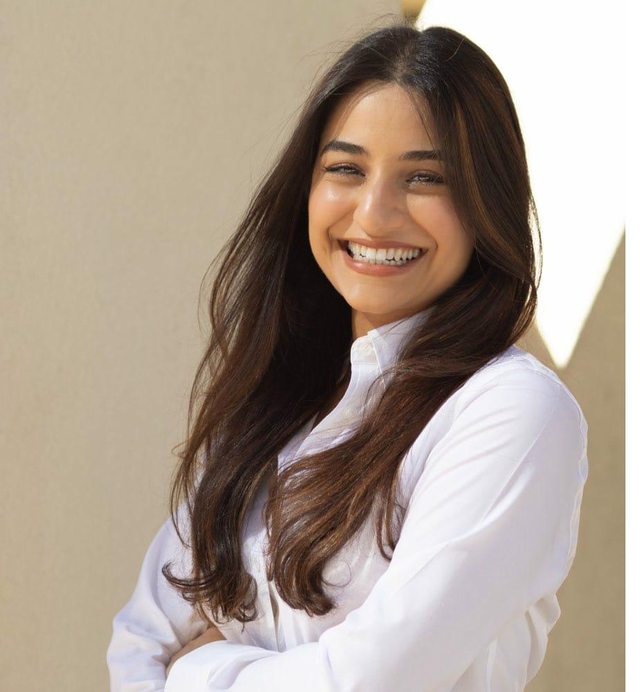
Jasaman (Jasmin) Tojjar is an MD- and PhD-trained clinical researcher focused on patient-centered, evidence-based care across the lifespan. She earned both degrees at Lund University in Sweden and is pursuing residency training in the United States. Her work brings together clinical reasoning, clear communication, continuity of care, prevention, and lifelong learning.
Jasaman Tojjar's clinical experience spans diverse settings and patient populations. From 2024 to 2025, she provided direct patient care during supervised training at a rural family medicine clinic at the Regional Center for Border Health in Arizona, working alongside supervising physicians to serve a largely underserved community. During that period, she held Arizona Medical Board Transitional Training Permit R81155. It was a supervised training permit, not an independent medical license. She has also trained in outpatient and academic medical settings in California and Sweden. This breadth, paired with her research background, shapes a practical, whole-person approach to clinical care.
Her doctoral research used Swedish nationwide population-based cohorts to study how biological sex influences the onset and clinical course of Type 1 diabetes in children, with findings published in Diabetes Care. She has also published in cancer epidemiology and ophthalmology. Her PhD supports an analytical, evidence-focused approach to chronic disease and continuity-based care.
Born and raised in Lund, Sweden, Dr. Tojjar attended Katedralskolan, a historic school founded in 1085. She has mentored junior researchers at UCLA and Lund, supervised medical students during her Arizona clinical training, and taught physiology and histology. She speaks six languages and is open to relocating for residency training.
Areas of interest while pursuing residency training, informed by medical education, supervised clinical experience, and formal research training.
An interest in structured history taking, differential diagnosis, and revisiting uncertainty during supervised training.
An interest in plain-language explanations, eliciting patient priorities, and shared decision making.
An interest in continuity, prevention, and chronic-disease follow-up across care settings.
Formal PhD training and peer-reviewed work provide experience reading studies, working with data, and communicating uncertainty.
A working principle of seeking supervision, learning from colleagues, and documenting the limits of current evidence.
Published work includes population-based clinical epidemiology, diabetes, ophthalmology, and cancer epidemiology.
A career built across two continents and many clinical settings, driven by a commitment to patients and to translating research into better care.
Dr. Tojjar's published research applies data-driven, population-level methods to questions in diabetes, metabolic risk, cancer epidemiology, and ophthalmology.
Population-based studies of 3,645+ Swedish children investigating how biological sex influences age at diagnosis, HLA genotype, autoantibody profiles, and clinical presentation in T1D.
Advanced retinal phenotyping using swept-source OCT angiography, ultra-widefield imaging, and fractal analysis to characterize microvascular changes in diabetic retinopathy and inherited retinal diseases.
Study of 11,050 children exploring heredity, parental diabetes, and childhood metabolic risk, including the impact of parental T1D and T2D on childhood obesity prevalence.
Registry-based research leveraging Sweden's comprehensive national health databases for large-scale population studies. Experience with cohort design, HLA genotyping, and autoantibody profiling.
Nationwide study of 20,559 Swedish women examining statin use and breast cancer survival, using pharmacoepidemiological methods and registry data analysis.
Seven peer-reviewed publications, including two first-author papers, spanning diabetes, ophthalmology, childhood obesity, and cancer epidemiology. Together, the publications have received 150+ citations.

Tojjar J, Cervin M, Hedlund E, Brahimi Q, Forsander G, Elding Larsson H, Ludvigsson J, Samuelsson U, Marcus C, Persson M, Carlsson A.
Hedlund E, Tojjar J, Lilja L, Elding Larsson H, Forsander G, Ludvigsson J, Samuelsson U, Marcus C, Norström F, Persson M, Carlsson A.
Feo A, Tojjar J, Sarraf D.
Corradetti G, Verma A, Tojjar J, Almidani L, Oncel D, Emamverdi M, Bradley A, Lindenberg S, Nittala MG, Sadda SR.
Magesan K, Gnanaraj R, Tojjar J, Amose T, Alagorie AR, Mahalingam M, Sen P, Verma A, Sadda SR.
Tojjar J, Norström F, Myléus A, Carlsson A.
Borgquist S, Broberg P, Tojjar J, Olsson H.
Each publication above links to its record-specific PubMed entry. Additional research profiles are available in the Connect section.
A selection of oral and poster presentations in ophthalmology, diabetes, and retinal research.
Selected research grants, scholarships, and academic honors from Sweden and the United States.
Research Grants & Fellowships
Research fellowship funding · 2022
Grant for vision-related research · 2021
International research collaborations at UCLA · 2020
Year-long advanced research training · 2015 to 2016
Three-month research placements · 2013, 2014
Innovation & Academic Honors
All faculties at Lund University · 2014, 2015, 2017
National and Lund chapters · 2014, 2016
Scholarship for medical studies · 2017
Academically distinguished students · 2013 to 2015
Academic support at Lund · 2016
Start with three foundational guides to primary care, screening, and diagnostic reasoning, then explore the complete evidence library.
Good primary care provides first contact, continuity, comprehensive care, coordination, prevention, and decisions grounded in a person's goals and context.
Read the guide →Evidence and research methodsA screening test's value depends on population risk, test thresholds, treatment benefit, follow-up capacity, harms, and the full care pathway.
Read the guide →Chronic disease in primary careHistory and examination set pretest probability, identify urgency, and guide testing. Their value depends on technique, reliability, and the clinical question.
Read the guide →A daily series of case-based clinical analyses exploring diagnostic reasoning, evidence appraisal, communication, continuity, and systems safety.
Work through broad differentials, red flags, focused examinations, and next-step decisions in outpatient presentations.
Explore the collection → Across life stagesConsider age, pregnancy, medications, comorbidity, family priorities, access, and continuity when shaping a plan.
Explore the collection → Evidence and safetyCompare plausible explanations, identify time-sensitive alternatives, interpret evidence, and make safety-netting explicit.
Explore the collection →Daily clinical reasoning series
The casebook assigns one evidence-grounded analysis to every calendar day from October 1, 2025 through July 20, 2026. Each original knowledge demonstration is developed from public medical evidence without patient records or restricted course material. Every case analysis and evidence guide has been fully reviewed by Jasaman (Jasmin) Tojjar, MD, PhD. The companion evidence library offers plain-language explainers across prevention, research literacy, and whole-person care.
Jasaman (Jasmin) Tojjar earned MD and PhD degrees at Lund University and is pursuing residency training in the United States. Her peer-reviewed research spans diabetes, epidemiology, and ophthalmology.
Jasaman Tojjar is pursuing residency training in the United States. She is open to consideration across a range of programs and brings broad clinical experience, research training, clear communication, and an evidence-based approach to patient care.
Jasaman Tojjar's research has examined sex differences in pediatric Type 1 diabetes, population-based clinical epidemiology, retinal imaging, childhood obesity, and cancer epidemiology.
Jasaman Tojjar earned her MD and PhD from Lund University in Sweden. Her doctoral thesis was titled Aspects of Sex Differences in Type 1 Diabetes.
Jasaman Tojjar's U.S. experience includes supervised rural family medicine training in Arizona and clinical or research settings at UCLA, the University of Arizona, and UC Irvine.
During supervised Arizona training from 2024 to 2025, Jasaman Tojjar held Arizona Medical Board Transitional Training Permit R81155. It was a supervised training permit, not an independent medical license.
Jasaman Tojjar speaks Swedish, English, Persian or Farsi, Norwegian, Danish, and French.
Jasaman Tojjar has seven peer-reviewed publications, including first-author papers in Diabetes Care and Childhood Obesity, with 150+ citations across her publications.
The Clinical Reasoning Casebook is a daily series of case-based clinical analyses covering diagnostic reasoning, evidence appraisal, communication, continuity, and systems safety.
Use the LinkedIn profile in the Connect section for professional inquiries. The other listed profiles provide publication and academic background.
For professional or residency-related inquiries, connect through LinkedIn. Publication and academic profiles are listed below.